Kesmas Journal
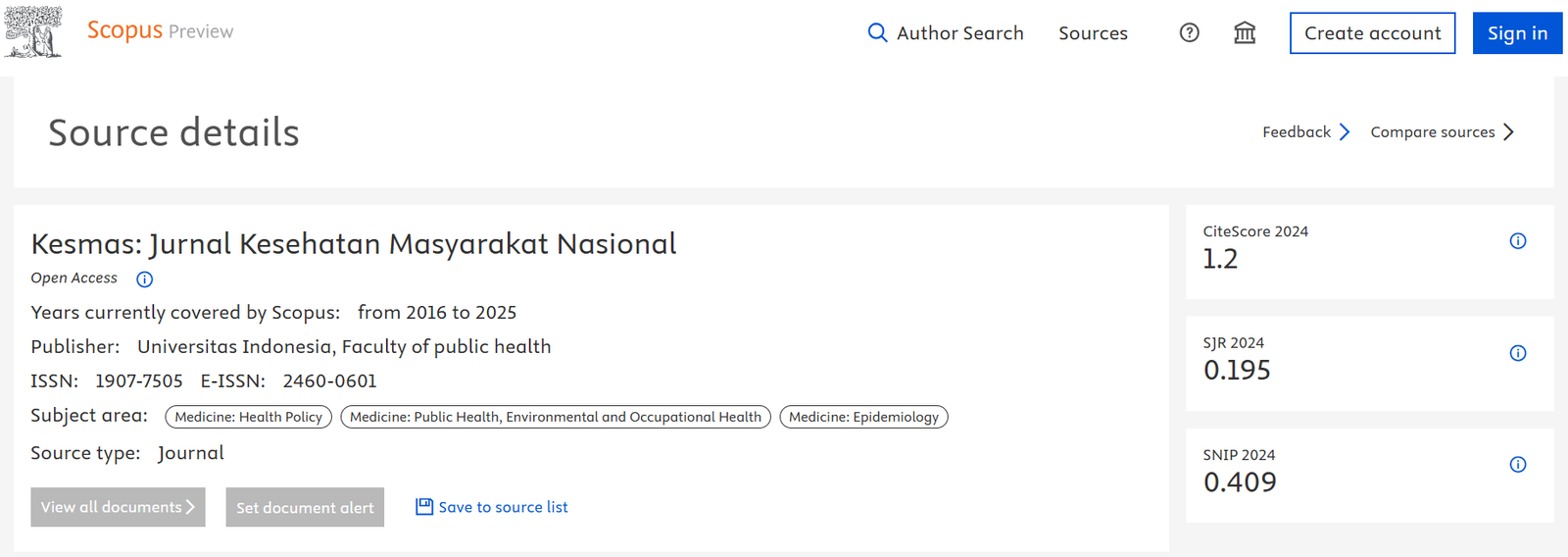
The Kesmas Journal, with its esteemed ISSN: 1907-7505, stands as a prominent publication in the realm of multidisciplinary science. As a Scopus indexed journal, it showcases a rigorous selection of scholarly articles that contribute significantly to various scientific domains.
Significance of Scopus Indexing
Being indexed in Scopus elevates the Kesmas Journal, as it ensures high visibility and credibility within the scientific community. Researchers and academics recognize Scopus as a leading database, making it crucial for professionals seeking to disseminate their work effectively. Publication in such a reputed journal enhances the reach and impact of scholarly research.
Focus on Multidisciplinary Science
The Kesmas Journal is dedicated to fostering multidisciplinary approaches in science, welcoming studies across diverse fields such as health sciences, social sciences, and environmental studies. This inclusive approach not only broadens the horizon for researchers but also facilitates collaborative efforts that can lead to innovative solutions to complex societal challenges.
Scope of the Journal
Covers a wide range of disciplines including Kesmas, remote sensing, spatial analysis, and multidisciplinary applications in science, engineering, and technology.
Scopus Indexing
It is actively indexed in Scopus ensuring academic credibility and visibility.
Peer-Reviewed Process
Follows a formal peer-review system involving editorial board members and independent referees to maintain publication quality.
Open Access Model
The journal is open access, allowing free and global dissemination of published research.
Monthly Publication Frequency
Publishes issues monthly, offering frequent opportunities for submission and publication.
Multidisciplinary Coverage
Accepts papers from life sciences, engineering, technology, management, and environmental sciences, promoting cross-disciplinary research.
Submission Process
Manuscripts can be submitted via email to editorkesmas@gmail.com, with a structured format and cover letter.
Focus on Original Research
Prioritizes original research articles and review papers that contribute novel insights or methodologies in Kesmas and related fields.
Visual and Technical Rigor
Encourages the use of maps, spatial models, and technical diagrams to support findings and enhance clarity.
Ethical and Quality Standards
Maintains high standards for plagiarism checks, citation accuracy, and scientific integrity, aligning with global academic norms.